
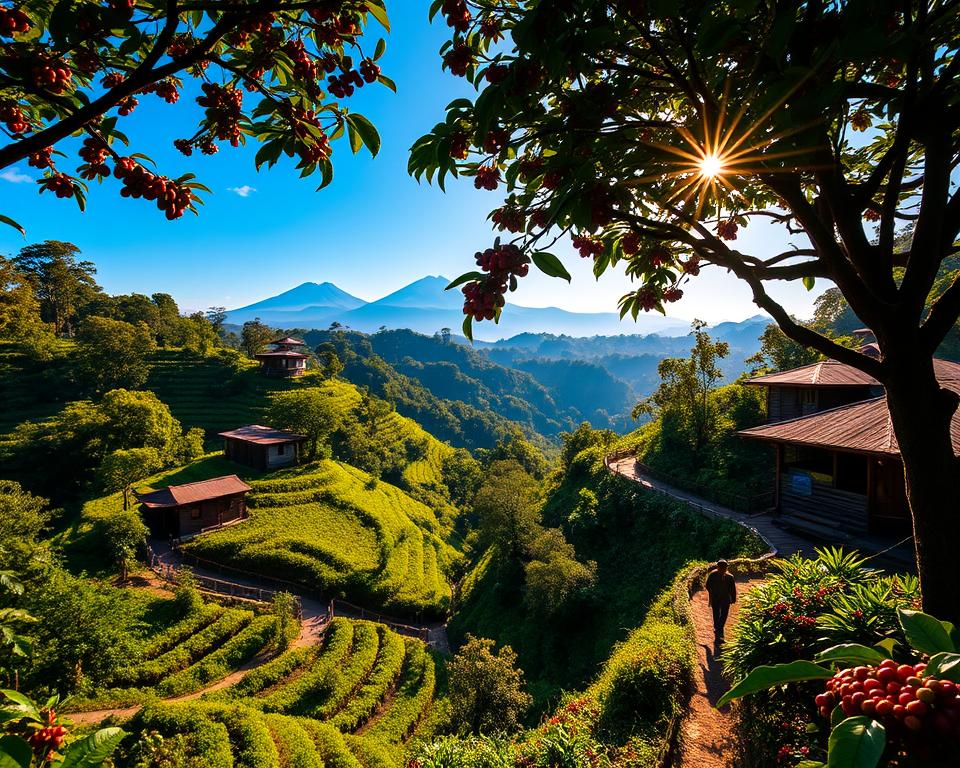
Guatemala’s rich culture is tied to its historic coffee farms. These farms have shaped the country’s identity. The Antigua region, with its volcanic soil and mild climate, has been key to coffee production for centuries.
These farms are more than just economic assets. They are a big part of Guatemala’s culture. People from all over come to see the traditional coffee-making process and learn about the country’s history.
The importance of these farms is clear. They add greatly to Guatemala’s cultural heritage. So, they are celebrated and kept safe for the next generations.
The Rich Legacy of Guatemala’s Coffee Industry
Guatemala’s coffee plantations have a long history, starting in the 18th century. They have greatly influenced the country’s economy. Coffee’s arrival in Guatemala started a new chapter in agriculture and trade.
The coffee industry has grown Guatemala’s economy and become a big part of its culture. Most coffee farms, or “fincas,” are family-run. They keep traditions and skills alive for generations.
Coffee production has a big impact on Guatemala’s economy. It’s a key export, bringing in a lot of money and jobs.
| Year | Coffee Production (tons) | Economic Impact |
|---|---|---|
| 2010 | 220,000 | Significant contributor to GDP |
| 2015 | 240,000 | Increased employment opportunities |
| 2020 | 260,000 | Enhanced economic stability |
Guatemala’s coffee history shows its commitment to quality and tradition. The coffee industry’s legacy is still felt today, in both the economy and culture.
Understanding Guatemala’s Coffee Regions
Guatemala’s coffee regions vary from highlands to lowlands. Each area has its own flavors and ways of making coffee. The country’s geography and climate create different coffee spots, each with its own traits.
Guatemala is famous for its coffee, especially in Antigua, Huehuetenango, and Atitlán. Antigua’s coffee is balanced, thanks to the nearby volcanoes. They make the climate mild and the soil rich. Huehuetenango, with its high altitude and dry air, makes coffee that’s bright and lively.
The Atitlán region’s coffee is both balanced and complex. This is because of its lake-effect climate. Many heritage coffee estates and vintage farms are found here, where old farming ways are kept alive.
Every region in Guatemala has its own special terroir. This means the soil, altitude, and climate all affect the coffee’s taste. These factors make each region’s coffee unique.
Knowing about these regions helps us enjoy Guatemala’s coffee more. Whether it’s Antigua’s balanced flavors or Huehuetenango’s bright taste, each place offers a special coffee experience.
What Makes Historic Coffee Farms Special
Historic coffee farms in Guatemala are more than just land. They hold a rich cultural heritage. These farms have shaped Guatemala’s coffee industry and are known for their history and beauty.
The buildings on these farms are amazing, showing off old-time architecture. Many farms keep their original look, giving visitors a peek into the past.
These farms are key in keeping traditional coffee farming alive. They act as museums, where old methods are still used. This knowledge is shared from one generation to the next.
These sites are also important for the taste of Guatemalan coffee. The mix of old farming ways and the land’s unique qualities makes the coffee famous worldwide.
In short, historic coffee farms stand out because of their buildings, history, and role in keeping old farming methods alive. They are truly special historical coffee growing sites.
How to Identify Authentic Historic Coffee Farms
Finding real historic coffee farms means looking at their buildings and history. In Guatemala, these farms are more than just places to grow coffee. They keep alive the culture of the past.
Architectural Elements to Look For
Real historic coffee farms show off special building features from their time. These might include:
- Traditional construction materials such as adobe, wood, and tile
- Classic hacienda-style layouts with central courtyards
- Ornate details like carved wooden doors and decorative tile work
But it’s not just about the buildings. The history of a coffee farm is also key. This history can be found in:
| Document Type | Description | Significance |
|---|---|---|
| Original deeds | Proof of land ownership | Establishes historical ownership |
| Historical photographs | Visual records of the farm’s past | Provides insight into past operations |
| Awards and certifications | Recognition of quality and heritage | Validates the farm’s reputation |
By looking at both the buildings and the history, you can find true historic coffee farms. These farms are a big part of Guatemala’s culture.
Planning Your Visit to Guatemala’s Historic Coffee Farms
Visiting Guatemala’s historic coffee farms is a mix of culture and nature. These farms show the country’s history and old coffee-making ways. They give a peek into the past and the traditions kept alive for years.
Guided vs. Self-Guided Tours
First, you must decide between a guided or self-guided tour. Guided tours share deep insights into the farms’ history and coffee’s role in Guatemala. They’re led by experts who know a lot.
Self-guided tours let you explore at your own speed. Many farms have clear paths and signs. This makes it easy to wander on your own.
| Tour Type | Benefits | Considerations |
|---|---|---|
| Guided Tour | In-depth knowledge, cultural insights | Less flexibility, potentially more cost |
| Self-Guided Tour | Flexibility, personal pace | May miss out on detailed historical context |
What to Bring and Wear
Be ready when you visit Guatemala’s coffee farms. Wear comfy shoes for walking on uneven ground. Don’t forget a hat, sunscreen, and bug spray for a better visit.
Casual clothes are best, but bring layers. The weather can change a lot between shade and sun.
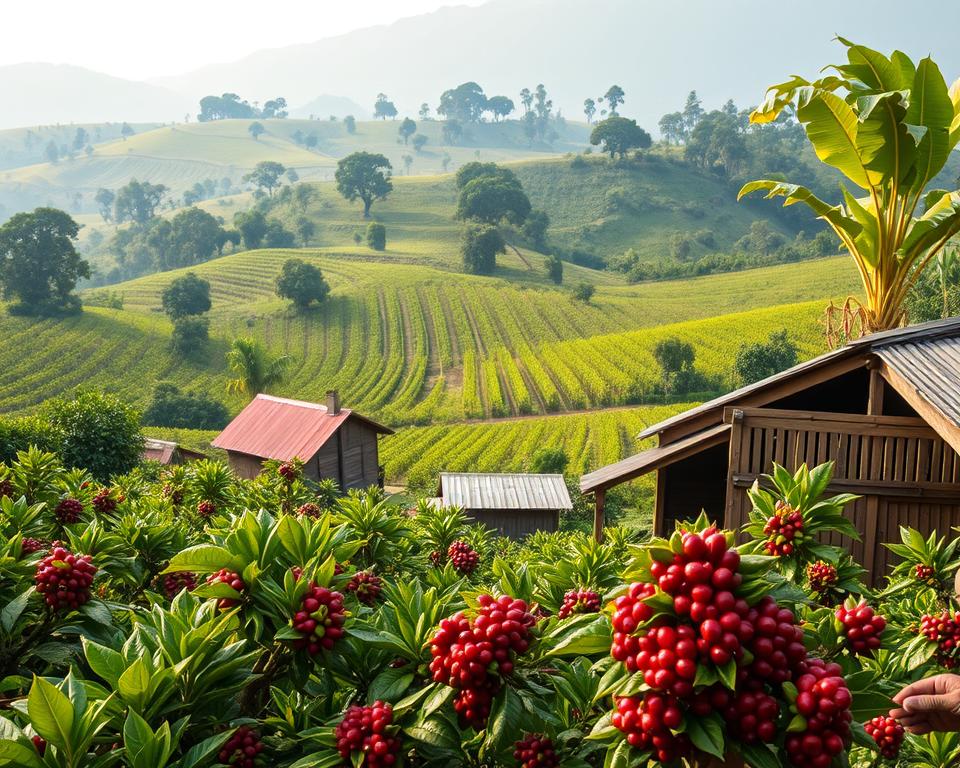
Plan well to enjoy your trip to Guatemala’s coffee farms. Whether you go on a guided or self-guided tour, it will be a memorable journey. You’ll learn a lot and have a great time.
Step-by-Step Guide to Traditional Coffee Production
The traditional coffee production in Guatemala is a labor of love. It involves careful steps from harvesting to roasting. This process ensures high-quality coffee and keeps the cultural heritage alive.
Coffee harvesting happens between November and March. Guatemalan farmers pick coffee cherries at the ripest time. This ensures the best flavor.
After picking, the coffee cherries are processed. This means removing the outer skin and pulp. There are different methods like washed, natural, and honey processing. Each method changes the coffee’s flavor.
| Processing Method | Description | Flavor Profile |
|---|---|---|
| Washed | Involves removing the skin and pulp before drying | Clean, bright acidity |
| Natural | Dried with the fruit still attached | Fruity, sweet, and complex |
| Honey | Pulp is removed, but some fruit is left on during drying | Balanced acidity and sweetness |
Next, the coffee beans are dried to 11% moisture. They can be dried on patios, raised beds, or machines. After drying, the beans are hulled to remove the parchment layer. This leaves green coffee beans ready for roasting.
Roasting is the last step. It turns green coffee beans into the aromatic coffee we love. Roasters control temperature and time to highlight each coffee’s unique taste.
Guatemala’s coffee plantations are famous for their traditional methods. They ensure every cup of coffee is a taste of the country’s rich culture.
5 Must-Visit Historic Coffee Farms in Guatemala
Guatemala is a paradise for coffee lovers. It’s home to historic coffee farms that have shaped the country’s coffee culture. These farms are key to Guatemala’s coffee industry and hold cultural and historical significance.
Guatemala’s historic coffee farms are famous for their role in the country’s coffee legacy. Here are five farms you must see. They show the rich history and unique features of Guatemala’s coffee production.
- La Azotea Coffee Farm: This farm is known for its historic architecture and traditional coffee making. It’s a prime example of Guatemala’s coffee history.
- Finca El Injerto: This farm is known for its innovative coffee production while keeping traditional practices. It’s a key site for understanding Guatemala’s coffee industry evolution.
- Finca San Jerónimo: Dating back to the 19th century, Finca San Jerónimo is one of Guatemala’s oldest coffee farms. It offers insights into the country’s coffee heritage.
- Finca La Trinidad: This farm is famous for its high-quality coffee and traditional farming. It gives a glimpse into the daily life of coffee farmers in Guatemala.
- Finca El Rosario: Known for its stunning natural beauty and eco-friendly coffee production, Finca El Rosario is a must-see. It’s perfect for those interested in sustainable coffee practices.
Visiting these historic coffee farms gives you a deeper understanding of Guatemala’s coffee culture and history. Each farm offers a unique view of the country’s coffee industry. You’ll see everything from traditional methods to new practices.
Exploring these farms is more than just learning about coffee production. It’s about experiencing Guatemala’s rich cultural heritage. These farms show the country’s history, cultural identity, and the passion for coffee of its people.
How to Experience Coffee Culture Beyond the Farm
Guatemala’s coffee culture is more than just coffee farms. Visiting these farms helps you see how coffee is made. But there’s more to it than just the farms.
Heritage coffee estates have interactive exhibits. These shows the coffee industry’s depth. You can learn by doing, thanks to step-by-step guides.
Some estates show old coffee-making ways. This lets you see how it was done before. You can learn more by visiting similar coffee culture blogs.
Historical Artifacts and Displays
Historical artifacts and displays also show coffee culture. Coffee museums and cultural centers have lots of history. They have old machines, photos, and more.
These displays show coffee’s technical side and the people who make it. By seeing these, you understand Guatemala’s coffee heritage better.
Preserving the Legacy of Historic Coffee Farms
Guatemala’s vintage coffee farms are a key part of the country’s coffee history. They need our help to keep them alive. These farms are important not just for coffee but also for the culture they represent.
Sustainable Tourism Practices
Helping these farms live on is crucial. We can do this by choosing eco-friendly tours and places to stay. This way, we help keep these sites in good shape.
| Sustainable Practice | Impact | Benefit |
|---|---|---|
| Eco-friendly tours | Reduced environmental footprint | Preservation of natural habitats |
| Locally sourced accommodations | Supports local economy | Enhanced community engagement |
| Responsible waste management | Minimized pollution | Healthier ecosystems |
Supporting Fair Trade and Direct Trade
It’s also important to support fair trade and direct trade. These methods make sure farmers get paid fairly for their coffee. This helps them keep their farms running well.
By choosing fair trade and direct trade, we help save Guatemala’s coffee history. These choices help farmers financially and keep the cultural value of these farms alive.
Conclusion: The Enduring Impact of Guatemala’s Coffee Heritage
Guatemala’s coffee heritage is truly significant. The old coffee plantations across the country are more than just old sites. They show the lasting effect of coffee on Guatemala’s culture and economy.
These historic farms have shaped Guatemala’s identity. They are known for their traditional coffee-making ways and the cultural experiences they provide. Saving these plantations protects history and helps local communities thrive.
Guatemala’s coffee heritage is a mix of tradition, innovation, and community. As the country grows, its coffee industry will stay a big part of its identity. Celebrating this heritage helps us value the hard work and passion that goes into making top-notch coffee.
The legacy of Guatemala’s old coffee plantations is a treasure that should be cherished and protected for future generations.