
Guatemalan coffee is famous for its rich taste and unique flavors. To enjoy it fully, you need to brew it just right.
Brewing control is essential for the perfect cup. Knowing the right coffee-to-water ratio is key. It makes all the difference in the taste of Guatemalan coffee.
Readers will learn how to improve their brewing skills. We’ll focus on Guatemalan coffee regions and give step-by-step guides. This will help you make the perfect cup every time.
Key Takeaways
- Understanding the importance of the coffee-to-water ratio for Guatemalan coffee.
- Learning how to apply brewing control for optimal flavor.
- Discovering step-by-step brewing instructions tailored to Guatemalan coffee.
- Exploring the distinct flavor profiles of different Guatemalan coffee regions.
- Achieving the perfect cup through balanced brewing techniques.
The Rich Heritage of Guatemalan Coffee
Guatemalan coffee’s story is one of tradition and innovation. It’s deeply connected to the land and the country’s history. This connection is part of Guatemala’s culture and economy.
Guatemala’s Position in the Coffee World
Guatemalan coffee is famous for its distinct flavor profiles and balanced acidity. The country’s unique geography, with volcanic soils and diverse climates, adds to its coffee’s complexity. Guatemala is among the top coffee producers, with its beans highly prized by coffee lovers.
Historical Development of Coffee Farming
Coffee farming in Guatemala started in the 18th century. Jesuit priests introduced it, and it quickly became a major crop in the highlands. Over time, farming techniques and processing methods have improved, making Guatemalan coffee of high quality.
Cultural Significance of Coffee in Guatemala
Coffee is more than a product in Guatemala; it’s a big part of the culture and identity. It’s important in daily life, from farms to family tables. The tradition of coffee farming is passed down, with many families relying on it for their income. This shows in the quality and care put into every cup of coffee.
Exploring Guatemala’s Premier Coffee Regions
Guatemala’s coffee regions are known for their diverse flavors. From Antigua’s volcanic soils to Huehuetenango’s high-altitude farms, each area brings its own special taste to the country’s coffee. This makes Guatemalan coffee truly unique.
Antigua: Volcanic Soil and Complex Flavors
Antigua’s coffee is famous for its rich flavors. The volcanic soil and perfect climate add to its taste. It often has notes of chocolate and spice, loved by coffee lovers.
Huehuetenango: High-Altitude Excellence
Huehuetenango is in the highlands of Guatemala. It’s known for top-quality coffee. The high altitude and dry climate make the coffee taste more complex. Huehuetenango coffee is known for its bright acidity and fruity flavors.
Cobán: Misty Climate and Unique Character
Cobán is in Alta Verapaz, known for its misty climate and rich biodiversity. The cloud forest slows down the coffee’s ripening, improving its taste. Cobán coffee is known for its balanced body and floral hints, offering a unique taste.
| Region | Notable Flavor Profiles | Altitude |
|---|---|---|
| Antigua | Chocolate, Spice | 1,500 – 1,700 meters |
| Huehuetenango | Fruity, Bright Acidity | 1,800 – 2,000 meters |
| Cobán | Floral, Balanced Body | 1,300 – 1,600 meters |
Knowing about each region’s unique qualities helps coffee lovers appreciate Guatemalan coffee more. Exploring these top coffee regions shows the hard work and conditions that make Guatemalan coffee so special.
Understanding the Coffee Ratio Guide for Guatemalan Beans
Guatemalan coffee is known for its rich heritage and unique flavors. Finding the right coffee-to-water ratio is key to bringing out the best taste. The ratio used can make or break the flavor of Guatemalan coffee beans.
Why Ratios Matter for Guatemalan Coffee
The coffee-to-water ratio is very important. It affects the balance and flavor of the coffee. Guatemalan coffee, with its many flavors, needs a ratio that matches its taste.
Using too much coffee can make the coffee taste bitter. Too little coffee can make it taste weak. The right ratio brings out the coffee’s best flavors.
Standard Ratio Recommendations
A good starting point for Guatemalan coffee is a ratio of 1:15 to 1:17. This means using 15 to 17 grams of water for every gram of coffee. This range works well for most brewing methods and highlights Guatemalan coffee’s unique tastes.
- For a stronger brew, try a ratio of 1:14.
- For a lighter brew, use a ratio of 1:16 or 1:17.
Adjusting Ratios Based on Regional Characteristics
Guatemala’s coffee regions have their own special flavors. For example, Antigua coffee has chocolate and spice notes. Huehuetenango coffee is bright and fruity. Adjusting the ratio can make these flavors stand out.
For coffee with bright acidity, a bit more water might be needed. For coffee with rich flavors, a bit less water is better. This way, you can make your coffee taste just right.
By adjusting the coffee-to-water ratio, you can make your Guatemalan coffee taste even better. It’s all about finding the right balance for your coffee.
Essential Equipment for Precise Coffee-to-Water Measurements
To make the perfect cup of Guatemalan coffee, you need the right tools. These tools help you get the coffee just right, neither too strong nor too weak. Precision is key in making great coffee.
Digital Scales and Their Importance
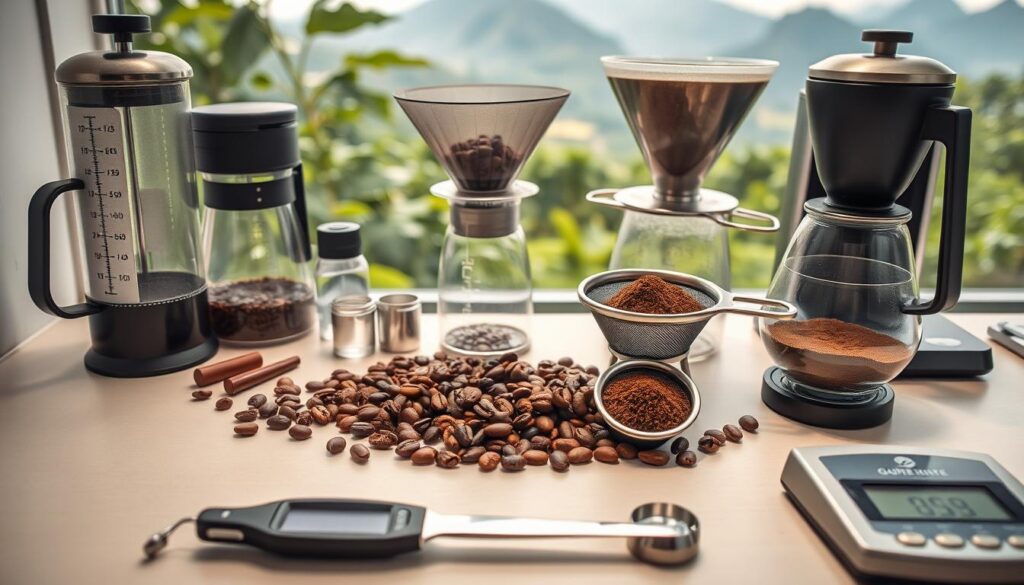
Digital scales are key for measuring coffee and water accurately. They let you control the coffee-to-water ratio perfectly. This is crucial for brewing amazing coffee. By using a digital scale, you can experiment with different ratios to find your perfect cup.
Measuring Tools for Water
Tools like jugs or kettles with measurement markings are vital for water. They help keep the brewing process consistent. Getting the water measurement right is key for achieving the desired brew strength.
Brewing Devices Best Suited for Guatemalan Coffee
Guatemalan coffee is great with many brewing methods, like pour-over, French press, and AeroPress. Each method brings out different flavors. For Guatemalan coffee, pour-over and French press are favorites. They really show off the coffee’s complex tastes.
Step-by-Step Brewing Methods for Guatemalan Coffee
To get the most out of Guatemalan coffee, you need to use the right brewing method. The way you brew it can greatly affect the taste.
Pour-Over Method with Optimal Ratios
The pour-over method lets you control the brewing process well. It’s great for bringing out the best in Guatemalan coffee.
Equipment Setup
First, put a pour-over dripper on your coffee mug or carafe. Use a paper or metal filter. Rinse it with hot water to get rid of any taste and warm up the equipment.
Water Temperature and Timing
Heat the water to about 200°F (93°C). Aim for a brewing time of 3 to 4 minutes. Use a scale to measure coffee and water accurately.
Pouring Technique
Pour the hot water over the coffee grounds in a circle, starting from the center. Make sure all grounds are soaked evenly.
French Press Technique for Guatemalan Beans
French press is a classic method that highlights the rich flavors of Guatemalan coffee.
Preparation Steps
Measure your coffee and water. Use a coarse grind to avoid clogging the press.
Immersion Process
Pour the hot water over the coffee grounds, making sure they’re fully saturated. Steep for 4 minutes.
Pressing Technique
Slowly press the plunger down, separating the grounds from the liquid. Pour the coffee into your cup right away.
AeroPress Method for Concentrated Flavors
The AeroPress is a versatile device that makes a smooth, full-bodied coffee.
Assembly and Setup
Put a paper or metal filter in the AeroPress cap and rinse it with hot water. Attach the cap to the brewing chamber.
Brewing Procedure
Add coffee grounds to the brewing chamber, followed by hot water. Stir, then steep for 1-2 minutes.
Pressure Application
Stir the mixture again, then slowly press the plunger down. The total brewing time should be around 2 minutes.
| Brewing Method | Coffee-to-Water Ratio | Brewing Time |
|---|---|---|
| Pour-Over | 1:15 to 1:17 | 3-4 minutes |
| French Press | 1:12 to 1:15 | 4 minutes |
| AeroPress | 1:15 | 2 minutes |
As “Coffee is the common man’s gold, and like gold, it brings to every person the feeling of luxury and nobility.” – Cafè Pasqualino. This quote captures the essence of coffee lovers who enjoy a well-brewed cup.
By following these brewing methods, you can achieve a perfect balance of flavor in your Guatemalan coffee. Try different ratios and techniques to find your perfect cup.
Grind Size Recommendations for Different Brewing Methods
Getting the perfect cup of Guatemalan coffee needs the right coffee-to-water ratio. It also needs the right grind size for your brewing method. The grind size greatly affects how much flavor you get from your coffee.
Coarse Grinds: French Press and Cold Brew
For French press and cold brew, use a coarse grind. This size helps prevent too much coffee flavor from coming out. It makes the coffee taste richer and more balanced.
A coarse grind is perfect for these brewing methods. It allows for the right amount of coffee flavor during the longer brewing times.
Medium Grinds: Drip and Pour-Over
Drip and pour-over coffee need a medium grind. This size is just right for getting the best flavor out of your coffee. It makes the coffee smooth and balanced, showing off Guatemalan coffee’s unique taste.
Fine Grinds: Espresso and Moka Pot
Espresso and Moka Pot coffee need a fine grind. The fine particles are needed for the high-pressure brewing these methods use. This results in a strong and rich coffee experience.
A fine grind is key for getting the coffee fully extracted. It brings out the coffee’s intense flavors and aromas.
In short, changing the grind size based on your brewing method is key for the perfect Guatemalan coffee. Knowing the right grind size for your method can make your coffee experience better. You’ll get to enjoy all the flavors Guatemalan coffee has to offer.
Tasting Notes and Flavor Profiles by Region
Guatemalan coffee is a rich mix of flavors, each unique to its region. The soil, climate, and altitude in each area make the coffee taste different.
Antigua: Chocolate, Spice, and Citrus Notes
Coffee from Antigua is famous for its rich flavor profile. It often tastes like chocolate, spice, and citrus. The volcanic soil and balanced climate make the coffee smooth and well-balanced.
Huehuetenango: Bright Acidity and Fruity Undertones
Huehuetenango coffee stands out for its bright acidity and fruity hints. The high altitude makes the coffee mature slower, adding to its complexity and flavor balance.
Cobán: Balanced Body with Floral Hints
Cobán coffee is known for its balanced body and floral hints. The misty climate and rich soil create a coffee that’s both balanced and delicate.
In summary, Guatemala’s coffee regions offer a variety of flavor profiles. From Antigua’s chocolate notes to Huehuetenango’s fruity hints and Cobán’s floral hints, each region has its own unique taste. Knowing these differences helps coffee lovers enjoy Guatemalan coffee’s special qualities.
Troubleshooting Common Issues with Guatemalan Coffee Brewing
Getting the perfect cup of Guatemalan coffee means fixing common brewing problems. Guatemalan coffee is famous for its rich flavors. But, brewing it can sometimes be tricky.
Addressing Over-Extraction Problems
Too much extraction can make your coffee taste bitter. To fix this, try a coarser grind size or brew it for less time. For instance, if you’re using a French press, brew it for a shorter time.
Solving Under-Extraction Issues
Under-extraction makes your coffee taste weak or sour. To fix this, use a finer grind size or brew it for longer. Make sure your coffee-to-water ratio is right for your brewing method.
Balancing Acidity and Bitterness
Guatemalan coffee is known for its balanced taste. If your coffee is too acidic or bitter, tweak your brewing settings. Try different ratios and brewing methods to get it just right.
Adjusting for Water Quality
Water quality greatly affects your coffee’s taste. Use filtered water and make sure it’s at the right temperature. Below is a table with the best water characteristics for brewing.
| Water Characteristic | Ideal Value |
|---|---|
| pH Level | 6.5-7.5 |
| Total Dissolved Solids (TDS) | 150-200 ppm |
| Temperature | 195-205°F |
Conclusion: Perfecting Your Guatemalan Coffee Experience
Mastering Guatemalan coffee is all about finding the right flavor balance. Knowing the unique tastes of places like Antigua, Huehuetenango, and Cobán helps. Adjusting the coffee-to-water ratio is key to unlocking the best flavors.
Having the right tools, like digital scales, is crucial for accurate measurements. Trying out different brewing methods, like pour-over or French press, helps you find what you like best.
Think about the roast level and grind size when tweaking the coffee-to-water ratio. The goal is a balanced cup with a smooth flavor. By following these tips, you can make every cup of Guatemalan coffee a delight.
Keep working on your brewing skills. The secret to a great coffee is finding the perfect flavor balance. Don’t be afraid to try new things and enjoy the unique tastes of Guatemalan coffee.