
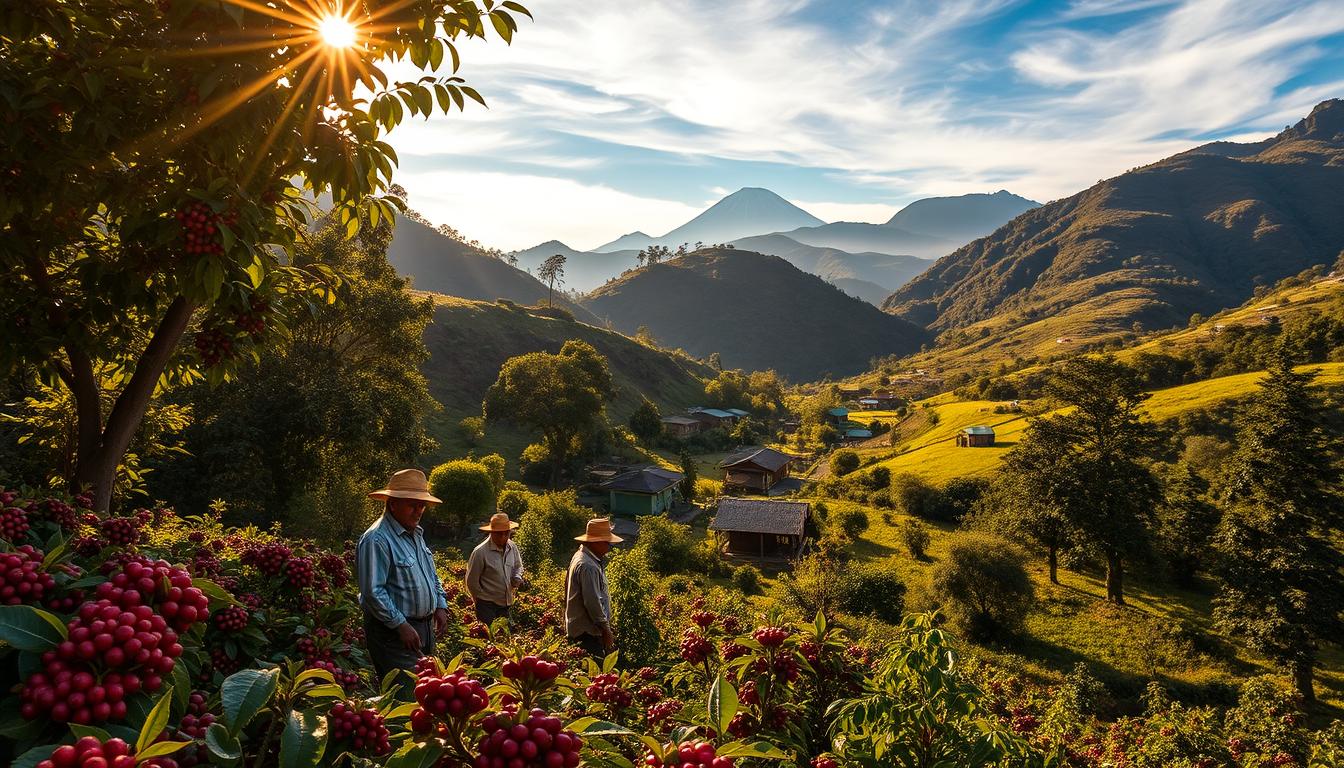
Guatemala is famous for its rich soil and varied climate. It’s home to top coffee-growing regions like Atitlán, Antigua, and Huehuetenango. For years, coffee farmers in these areas faced ups and downs in market prices and tough working conditions.
The arrival of Fair Trade has made a big difference. It ensures a fair price and supports eco-friendly farming. This has helped local farmers improve their lives and plan for the future.
Key Takeaways
- Fair Trade has positively impacted Guatemalan coffee farmers by providing a stable income.
- Main coffee-growing regions in Guatemala include Atitlán, Antigua, and Huehuetenango.
- Sustainable farming practices have been promoted through Fair Trade initiatives.
- Local communities have benefited from improved livelihoods and investments in their futures.
- The introduction of Fair Trade has brought significant changes to the coffee industry in Guatemala.
Introduction to Fair Trade Coffee in Guatemala
Fair Trade has changed the coffee world in Guatemala for the better. It helps farmers and those who buy coffee. This change has made life better for many coffee farmers in the country.
Definition of Fair Trade
Fair Trade is about fair trade partnerships for farmers and workers in poor countries. It’s about fairness, openness, and respect. Fair Trade makes sure farmers get a good price for their coffee. This price helps them farm better and invest in their communities.
Importance of Fair Trade in Coffee Production
Fair Trade is very important for coffee farming. It makes sure farmers get paid well for their work. It also helps them farm in a way that’s good for the planet.
By following Fair Trade rules, Guatemalan coffee farmers use methods that protect nature. This includes growing coffee in the shade and using organic farming. These methods help keep the environment healthy and the soil fertile.
Also, Fair Trade helps farmers sell their coffee worldwide. This means they can compete with others and show off their high-quality coffee. They do this while following strict rules about how they farm and treat their workers.
For local cooperatives, Fair Trade is a big deal. It lets them work on projects that help their communities. It also helps them farm better and live better lives. When we buy Fair Trade coffee, we help make the coffee world fairer and greener.
Overview of Guatemala’s Main Coffee Growing Regions
Guatemala’s coffee-growing regions are known for their rich flavors. The country’s varied climate and volcanic soil create distinct coffee tastes. From bright and acidic to rich and chocolatey, Guatemala’s coffee is diverse.
Antigua: The Heart of Guatemalan Coffee
Antigua is famous for its coffee. It’s surrounded by three volcanoes, making the soil mineral-rich. This results in coffee with balanced acidity and chocolatey flavors.
Antigua’s coffee farms use traditional methods. These methods, combined with the unique terroir, make the coffee stand out and high-quality.
Huehuetenango: Elevation and Flavor
Huehuetenango is in the highlands of Guatemala. Its coffee farms are at high altitudes. The dry climate and sunlight slow down the coffee’s maturation, giving it bright acidity and fruit notes.
Huehuetenango’s coffee tastes clean and vibrant. It has citrus and floral hints. The farmers here use new farming practices to improve their coffee’s quality.
Cobán: Climate and Unique Characteristics
Cobán is in the Alta Verapaz department. It’s known for its lush cloud forests. The high altitude and unique microclimate make the coffee special.
Cobán’s coffee has a balanced taste with spice and sweetness. The farmers here focus on sustainability. This improves the coffee’s quality and helps the environment.
Guatemala’s coffee-growing regions each have their own special conditions. This diversity makes Guatemalan coffee complex and of high quality. Understanding these regions helps us appreciate the richness of Guatemalan coffee.
Sustainable Farming Practices in Guatemala
Guatemalan coffee cooperatives are at the forefront of sustainable farming. They work hard to protect the environment for the future. This effort not only helps the planet but also makes Guatemalan coffee better and more unique.
Shade-Grown Techniques
Guatemalan farmers use shade-grown techniques. Shade-grown coffee grows under tree canopies. This method keeps biodiversity high, protects water, and cuts down on harmful chemicals.
Shade-grown techniques also make Guatemalan coffee taste better. By working with nature, farmers can grow top-quality coffee while caring for the environment.
Organic Farming Certifications
Many Guatemalan farmers are getting organic farming certifications. Organic farming uses natural ways to fight pests and diseases. It also makes soil healthier.
Organic farming has many perks. It’s better for the environment, improves soil, and opens up new markets for farmers. Here’s a comparison of organic and conventional farming:
| Farming Practice | Environmental Impact | Market Access |
|---|---|---|
| Conventional | High chemical use | Limited premium market access |
| Organic | Low environmental impact | Premium market access |
Fair Trade Initiatives and Their Benefits
Fair Trade initiatives play a big role in Guatemalan coffee farming. They ensure fair prices and market access. This helps farmers invest in sustainable farming.
Fair Trade does more than help farmers. It also benefits their communities. Fair Trade money goes to projects like education and healthcare. This improves life for farmers and their families.
The Role of Volcanic Soil in Coffee Flavor
Guatemalan coffee’s unique taste comes from its volcanic soil. The country’s coffee areas have rich, volcanic soil full of nutrients and minerals. This soil, along with diverse climates and geography, makes Guatemalan coffee complex and flavorful.
Impact of Soil Quality on Coffee Taste
Soil quality greatly affects coffee taste. Volcanic soils are great for coffee because they’re rich in nutrients and drain well. This lets coffee plants grow well, making the beans taste rich.
- Nutrient-rich soil helps coffee plants stay healthy, leading to better beans.
- Good drainage stops waterlogged soil, which can harm the roots.
- Mineral content in volcanic soil adds depth and complexity to coffee’s flavor.
How Altitude Enhances Coffee Profiles
Altitude also plays a big role in Guatemalan coffee’s flavor. Coffee grown high up matures slower, making its flavor more complex.
The mix of high altitude and volcanic soil creates a special terroir for Guatemalan coffee. This terroir is known for:
- A dense, heavy body
- A balanced acidity
- A rich, nuanced flavor with notes of chocolate, caramel, and fruit
Guatemalan coffee farmers carefully grow their coffee in these perfect conditions. This makes their coffee loved by coffee lovers worldwide.
Historical Context of Coffee in Guatemala
The story of coffee in Guatemala is both interesting and complex. It involves the growth of the economy, cultural traditions, and caring for the environment. For over a century, coffee has been key to Guatemala’s economy. It has shaped the country’s farming and its culture.
Development of Coffee Cultivation
Coffee growing started in Guatemala in the late 1700s. The first commercial farms were set up in the highlands. The arrival of coffee changed the country’s farming, as forests were cut down for coffee farms.
The mix of Guatemala’s weather, soil, and high altitude made it perfect for coffee. This led to the creation of unique coffee flavors.
As time went on, farming coffee became more sustainable. Shade-grown coffee was introduced, which helped keep biodiversity and improved coffee quality. Fair trade also played a big role, pushing for eco-friendly farming.
Coffee as a Cultural and Economic Pillar
Coffee is a big part of Guatemalan life, touching many areas of society. It’s seen in traditional coffee ceremonies and its role in local economies. The cultural importance of coffee is clear in how it brings people together, supporting community and culture.
From an economic standpoint, coffee is crucial. It provides jobs and income for many farmers and their families. The economic impact of coffee is huge, boosting Guatemala’s GDP and exports. Fair trade efforts help farmers get a better price for their coffee, improving their lives and the local economy.
The Economic Impact of Fair Trade on Farmers
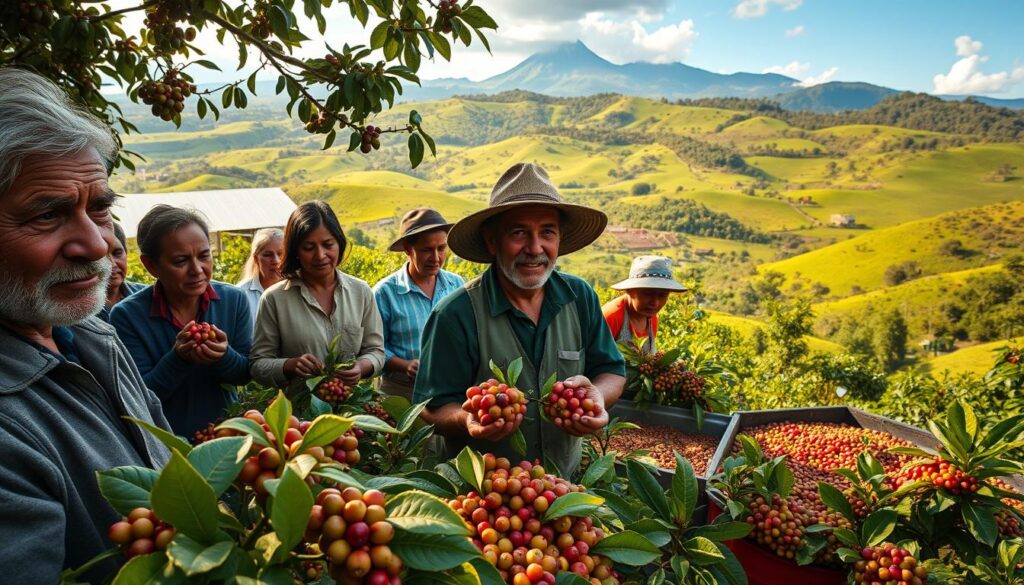
Fair Trade has made a big difference for Guatemalan coffee farmers. It lets them invest in their farms and communities. With a fair price for their coffee, they have a stable income. This improves their quality of life.
Increased Income and Stability
Fair Trade has greatly increased the income of Guatemalan coffee farmers. This stability helps them plan for the future. They can invest in their farms and cover important expenses.
The Fair Trade premium, an extra payment, goes to community projects. This boosts the farmers’ livelihoods even more.
Key benefits of Fair Trade include:
- Higher income through fair prices
- Improved economic stability
- Investment in farm improvements and community projects
A Fair Trade representative said, “The Fair Trade model empowers farmers. It gives them a fair price for their products. This lets them invest in their future and improve their living conditions.”
“Fair Trade has changed our lives. We can now afford to send our children to school and invest in our farms.”
Investment in Farm Improvements
Thanks to Fair Trade, Guatemalan coffee farmers can invest in their farms. They adopt sustainable farming practices and improve coffee quality. These investments help the farmers and make the coffee industry more sustainable.
The following table shows how Fair Trade has helped farmers invest:
| Investment Area | Pre-Fair Trade | Post-Fair Trade |
|---|---|---|
| Farm Equipment | Limited | Modernized |
| Sustainable Practices | Rare | Widespread |
| Community Projects | Few | Numerous |
By investing in their farms and communities, Guatemalan coffee farmers are improving their economic situation. They are also making the coffee industry more sustainable and fair.
Community Projects Supporting Farmers
Community projects have greatly helped coffee farmers in Guatemala. These efforts, led by cooperatives, have brought many benefits. They have improved the lives and work of farmers.
Education and Training Programs
Community projects have made a big difference in education and training. They teach farmers about sustainable agriculture practices and effective farm management. This helps farmers grow more and better coffee.
They also learn how to run their businesses better. This includes learning about money, marketing, and how to export coffee. This knowledge helps farmers succeed in the global market.
Infrastructure Development Initiatives
Improving infrastructure is another key area for community projects. They build roads, bridges, and irrigation systems. This makes it easier for farmers to get their coffee to market.
Cooperatives also fund schools and healthcare centers. This improves the lives of farmers and their families. These projects help the farming community and the wider area too.
These efforts have made a big difference for Guatemalan coffee farmers. They live better and have more economic stability. Cooperatives play a big role in these projects. They show how working together can lead to real change.
Environmental Protection Efforts
Environmental protection is key in Guatemalan coffee production. Many farms now use sustainable practices. This is important for keeping Guatemala’s biodiversity rich and coffee production going strong.
Sustainable Resource Management
Sustainable practices are central to environmental protection in Guatemalan coffee farming. These include using water wisely, cutting down on waste, and keeping soil healthy. For example, many farms use rainwater harvesting systems to lessen their need for groundwater.
Efficient water management is vital, given the growing issue of water scarcity. Mulching and cover cropping help keep soil moist, cutting down on irrigation needs. Also, using integrated pest management (IPM) strategies reduces chemical pesticide use, protecting the environment and farmworkers’ health.
Reforestation and Biodiversity Conservation
Reforestation and biodiversity conservation are crucial in Guatemalan coffee production. Many farms were once forests, and bringing these back is essential for biodiversity. Shade-grown coffee, in particular, supports a wide range of plant and animal life.
“Shade-grown coffee is not just beneficial for the environment; it’s also a key factor in producing high-quality coffee. The slower ripening process due to shade contributes to a more complex flavor profile.”
Reforestation and biodiversity conservation involve planting native trees, creating wildlife corridors, and protecting natural habitats. These efforts not only balance ecosystems but also help coffee crops face climate change better.
| Environmental Practice | Benefit | Impact on Coffee Production |
|---|---|---|
| Sustainable Resource Management | Conserves water and reduces waste | Enhances coffee quality and farm sustainability |
| Reforestation | Restores ecosystems and promotes biodiversity | Improves ecological balance and coffee crop resilience |
| Biodiversity Conservation | Protects natural habitats and species | Contributes to complex flavor profiles in shade-grown coffee |
Success Stories of Guatemalan Coffee Cooperatives
Fair Trade has changed the lives of many Guatemalan coffee cooperatives. It has boosted their economy and helped protect the environment. These cooperatives now contribute to Guatemala’s rich culture and conservation.
Notable Fair Trade Cooperatives
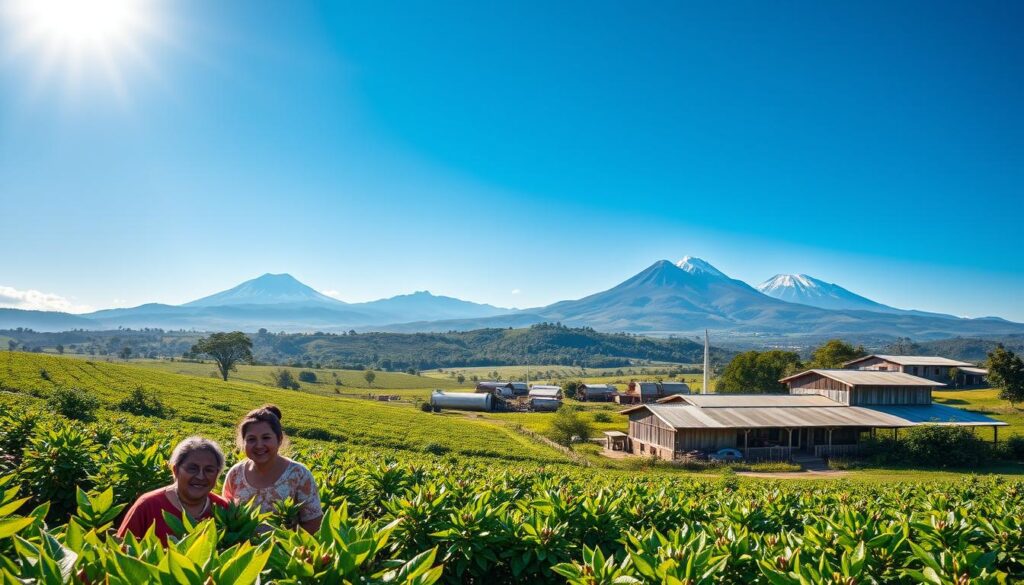
Guatemalan coffee cooperatives like La Voz and Atitlán are known worldwide for their quality. Fair Trade has helped them get better prices for their coffee. They also invest in their communities and farming practices.
La Voz has built schools and healthcare with Fair Trade money. Atitlán focuses on organic farming and reforestation. This improves their coffee and protects the environment.
“Fair Trade has given us the opportunity to not only improve our livelihoods but also to give back to our community and protect our environment,” said a member of the Atitlán cooperative.
Case Study: Transformation Through Fair Trade
Café El Injerto is a great example of Fair Trade’s impact. Before Fair Trade, they faced low prices and limited markets. But with Fair Trade, they gained access to new markets and better prices.
This change allowed Café El Injerto to improve their farms and train members. They also started community projects. This cooperative shows how Fair Trade can lead to positive change.
The success of Café El Injerto shows why we need to support Fair Trade. By choosing Fair Trade, we help Guatemalan farmers and support sustainable communities.
Challenges Faced by Guatemalan Coffee Farmers
Guatemalan coffee farmers face big challenges today. Climate change and market ups and downs are major issues. These problems hurt their work and the quality and amount of coffee they make.
Climate Change and Its Effects
Climate change is hitting Guatemalan coffee farmers hard. Higher temperatures and unpredictable rain change how coffee grows. This leads to less coffee and lower quality beans.
“We’re seeing more extreme weather events, like hurricanes and droughts, which directly impact our coffee crops,” said a Guatemalan coffee farmer. Many in the industry share this view, stressing the need for farming that can handle climate change.
Market Fluctuations and Economic Pressures
Guatemalan coffee farmers also deal with tough economic issues. Market fluctuations in the global coffee market cause price swings. This makes it hard for farmers to know how much money they’ll make from year to year.
“The price of coffee is often beyond our control, and when it drops, it affects our ability to invest in our farms and support our families,”
To fight these problems, many farmers are adopting Fair Trade practices. These offer a steady income and better trading conditions. But, the path to a fair coffee market is long, and support for sustainable farming is key.
Future of Fair Trade Coffee in Guatemala
The future of Fair Trade coffee in Guatemala is bright. More people want high-quality, eco-friendly coffee. This growing demand helps Fair Trade coffee’s prospects.
Growth and Expansion Opportunities
Guatemalan coffee farmers are set to benefit from Fair Trade’s rising popularity. New market chances are opening up. This growth is thanks to Fair Trade’s global success.
Benefits for Farmers and Communities
Guatemalan coffee farmers and their communities gain a lot from Fair Trade. Fair prices, better working conditions, and green farming are key. These efforts make the coffee industry fairer and greener.
As the coffee world changes, sticking to Fair Trade values is key. Support for Fair Trade helps farmers face market changes. It keeps them strong in a fast-changing world.