
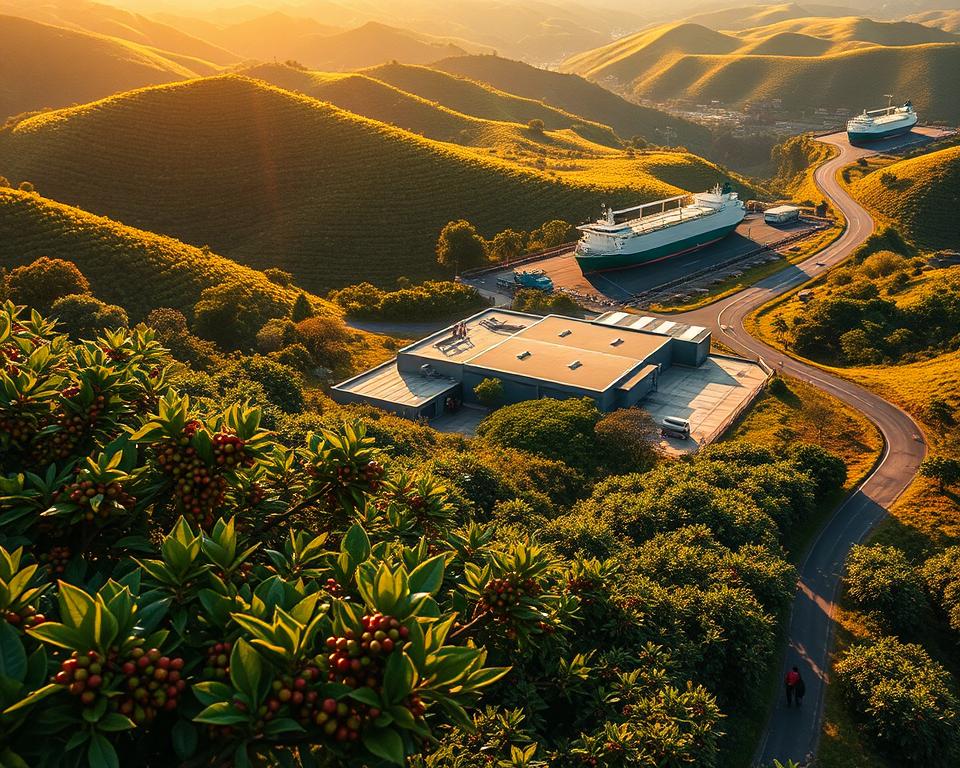
Guatemalan coffee is famous for its quality and unique taste. It’s a big hit worldwide. The coffee industry is a key part of Guatemala’s economy, with a lot going to other countries.
Getting Guatemalan coffee to other countries is a big job. New ways to be green are being used to help the environment. This includes better ways to move coffee and handling it to cut down on waste.
By going green, Guatemala is not only helping the planet. It’s also making its coffee better. This is key to staying ahead in the global coffee market.
The Current State of Guatemalan Coffee Exports
The coffee export industry in Guatemala is doing well, but it needs to be more eco-friendly. Guatemalan coffee is known worldwide for its quality. This industry is key to the country’s economy.
Now, the way coffee is shipped in Guatemala is mostly old-fashioned. The industry is looking into
Improving how coffee is moved around the world is a big goal. Using cars that use less fuel and planning better routes can help. Also, using green energy for processing and storing coffee can make things better.
Going green is good for the planet and helps the industry last longer. As more people want products that are good for the environment, Guatemalan coffee makers need to change. This will help them stay ahead in the global market.
Understanding Green Export Logistics for Coffee
Sustainable supply chain management is key for coffee exporters now. Green export logistics means using eco-friendly practices from start to finish. This includes everything from picking the coffee to getting it to the customer.
This method cuts down on environmental harm and makes things more efficient and cheaper. For coffee exports, green logistics means better routes, eco-friendly boxes, and energy-saving warehouses. It’s all about making the process greener.
Using green logistics, coffee sellers can lower their carbon footprint. This also attracts buyers who care about the planet. For more on the coffee market, check out Understanding the Coffee Market.
By going green, Guatemalan coffee sellers can stand out worldwide. They also help make the future more sustainable.
Assessing Your Current Export Carbon Footprint
As a coffee exporter, checking your carbon footprint is key to being green. Knowing how your actions affect the environment helps you make better choices. These choices can lower your carbon footprint.
To figure out your current carbon footprint, look at a few things. These include how you transport goods, what you use for packaging, and how much energy you use. Here’s a basic guide to help you start:
| Factor | Description | Impact |
|---|---|---|
| Transportation | Mode of transport (air, land, sea) | High emissions from air transport |
| Packaging | Type and quantity of packaging materials | Non-biodegradable materials contribute to waste |
| Energy Consumption | Energy used in processing and storage | High energy consumption leads to higher emissions |
By looking at these areas, you can find ways to cut down your carbon footprint. This makes your coffee export business better for the planet.
Lowering your carbon footprint is good for the planet and your brand. It also helps you follow stricter environmental rules.
Sustainable Packaging Solutions for Coffee Exports
Sustainable packaging is changing the coffee export world. It offers green options that cut down on waste. As more people want Guatemalan coffee, using eco-friendly packaging is key to reduce waste and improve the green coffee network.
Using sustainable packaging can greatly lessen the environmental harm of coffee exports. It involves using materials that can break down, recycle, and reduce waste. This helps make the coffee supply chain greener.
At first, eco-friendly packaging might cost more than old methods. But, it can save money in the long run. Here’s a cost comparison:
| Packaging Type | Initial Cost | Long-term Savings |
|---|---|---|
| Traditional Packaging | $0.50 per unit | $0 |
| Sustainable Packaging | $0.60 per unit | $0.10 per unit |
Supplier Selection Guide
When picking suppliers for green packaging, look at their eco-friendly efforts. Check their material sources and recycling options. It’s important to choose suppliers who care about the environment.
By choosing sustainable packaging and the right suppliers, Guatemalan coffee can become more eco-friendly. This appeals to customers who care about the planet. It also makes the coffee export process better for the environment.
Optimizing Transportation for Green Coffee Exports
Green coffee exports need smart transport plans to cut down on harm to the environment. Using eco-friendly vehicles is a big step. Switching to electric or hybrid trucks can greatly lower carbon emissions compared to diesel trucks.
Route optimization is also key. Advanced logistics software helps find the best routes. This cuts down on fuel use and emissions. It’s good for the planet and saves money too.
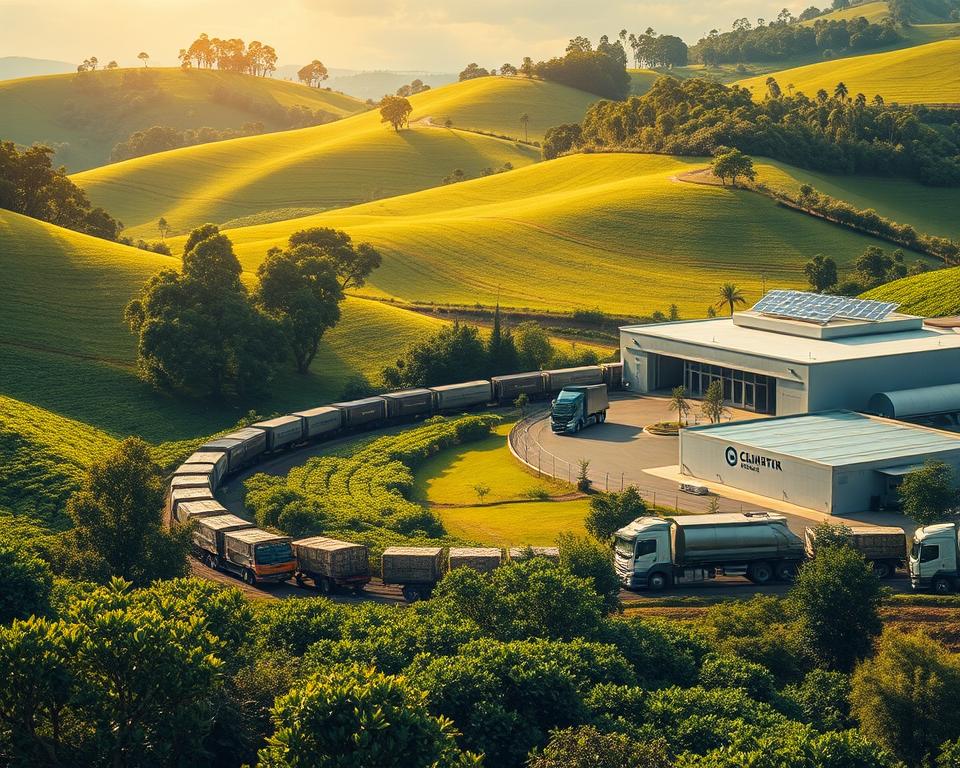
For more info on green logistics and urban mobility in Central America, check out the European Commission’s report on Green Logistics and Urban.
| Transportation Mode | Carbon Emissions | Cost Efficiency |
|---|---|---|
| Truck | High | Medium |
| Rail | Medium | High |
| Sea | Low | High |
| Electric/Hybrid Truck | Low | Medium |
By using these methods, coffee exporters can greatly lessen their carbon impact. This helps make the coffee industry more eco-friendly.
Green Export Logistics Coffee: Best Practices and Implementation
The demand for sustainable coffee is rising. Guatemala, famous for its top-notch coffee, is leading the way in eco-friendly practices. It’s key to cut down the environmental harm from coffee transport and make the supply chain greener.
For coffee exports, the best green logistics include smarter routes and transport. Using greener vehicles or trains can help. For example, responsible coffee transport can greatly reduce emissions.
Improving logistics efficiency is another vital step. This means faster customs clearance and less waiting at ports. It also means delivering just when needed. These steps help the environment and the business’s bottom line.
Choosing eco-friendly packaging is also crucial. Switching to green materials and reducing waste are big steps. These actions make the coffee export process more sustainable.
To put these practices into action, coffee exporters need training and tech. They should use software to track shipments and data to find the best routes. Training staff on green logistics is also important.
By focusing on green export logistics, Guatemala’s coffee can grow while being kinder to the planet. This move helps secure a greener future for coffee worldwide.
Implementing Green Supply Chain Management
Green supply chain management is changing how Guatemalan coffee is shipped out. It makes the process better for the planet. This method adds eco-friendly steps to every part of the chain, from getting the coffee to sending it out.
This approach has many good points. It cuts down the harm to the environment from coffee exports. It also makes things run smoother and can save money. By choosing greener ways to ship, Guatemalan coffee sellers can lessen their carbon footprint.
To start green supply chain management, companies need to look at their current ways of doing things. They should find ways to do better. This could mean using better packaging or finding shorter routes to cut down on fuel use.
Another important step is to pick greener shipping options. This might mean using ships that use less fuel. Or, it could mean using trains or electric cars for moving goods on land.
By going green, Guatemalan coffee sellers help the planet. They also make their brand look better. This attracts customers who care about the environment.
Also, green supply chain practices make the chain stronger and cheaper to run over time. It’s a smart choice for the business and the planet.
Carbon Offsetting Strategies for Coffee Exporters
Guatemalan coffee exporters are now looking into carbon offsetting due to climate change worries. This means they pay for projects that cut down greenhouse gases. It’s key for them since shipping coffee around the world is a big source of emissions.
One good way to offset carbon is by backing renewable energy. Coffee exporters can help by funding solar, wind, or hydro projects. This cuts down their carbon footprint and helps the world switch to cleaner energy.
Another smart choice is supporting reforestation. Trees take in carbon dioxide as they grow. So, coffee exporters can help by funding tree planting in places like Guatemala. It’s good for the environment and helps offset their emissions.
| Carbon Offsetting Strategy | Description | Benefits |
|---|---|---|
| Renewable Energy Projects | Investing in solar, wind, or hydroelectric power | Reduces carbon footprint, supports clean energy |
| Reforestation Programs | Supporting tree planting efforts | Promotes biodiversity, natural carbon absorption |
By using these carbon offsetting methods, Guatemalan coffee exporters can lessen their environmental impact. It makes them more sustainable and attracts eco-friendly buyers from all over.
Certifications and Standards for Sustainable Coffee Exports
The push for greener coffee exports has led to the development of various certifications and standards. These guide sustainable practices. They ensure coffee is produced and traded fairly and sustainably. They also make coffee exports more marketable.
Certifications like Fairtrade and Organic are well-known in the coffee world. Fairtrade ensures coffee farmers get a fair price for their coffee. Organic focuses on the environment, avoiding synthetic fertilizers and pesticides.
These certifications have many benefits. For exporters, they can mean higher prices and more market access. For consumers, they mean their coffee is made responsibly.
Some key benefits of adopting these certifications include:
- Increased market access and competitiveness
- Improved social and environmental sustainability
- Enhanced brand reputation
- Better prices for farmers
Implementing green supply chain management is key for coffee exporters. It includes getting the right certifications. This way, exporters meet the demand for sustainable coffee. They also get premium prices for certified coffee.
Financial Incentives and Support for Green Logistics
Guatemala’s coffee sector is getting a boost from financial incentives for green logistics. The government and international groups see the value in sustainable coffee practices. They offer support for eco-friendly coffee exports.
Several programs give financial help to coffee exporters who go green. These include:
- Grants for sustainable packaging solutions
- Low-interest loans for energy-efficient transport
- Subsidies for carbon offsetting
- Tax breaks for eco-friendly practices
These incentives are key to getting more coffee exporters to go green. They help lower the cost of sustainable practices. This makes coffee exporters more competitive and helps the environment.
There’s also support for a green coffee distribution network through infrastructure investments. This includes better roads and transport systems. It makes moving coffee more efficient and cuts down on carbon emissions.
Coffee exporters in Guatemala can take advantage of these incentives and support. By doing so, they can boost their green image, work more efficiently, and help the eco-friendly coffee export market grow.
Conclusion: Building a Sustainable Future for Guatemalan Coffee Exports
The Guatemalan coffee industry is ready to make a big splash globally by going green. By understanding the current state of coffee exports and using sustainable practices, they can cut down on carbon emissions. This also boosts their brand image.
Organic coffee export logistics are key in this change. They help exporters lessen environmental harm while keeping quality high. Practices like better transportation and eco-friendly packaging cut costs and boost efficiency.
As the industry heads towards a greener future, using financial help for green logistics is vital. This way, Guatemalan coffee exporters can stay ahead in the global market. They also help make the coffee supply chain more eco-friendly.
By taking these steps, the Guatemalan coffee industry can create a sustainable future. This benefits the environment and the economy. The move towards sustainability will not only improve the industry’s image. It will also ensure its success for years to come.